
With TDP and YSRCP trying to score political points, the sacred laddu may well create a storm in days to come.
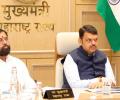
The previous Congress-NCP government had issued an ordinance to grant a 16 per cent quota to Marathas and five per cent to Muslims.

The Unnao rape case survivor expressed satisfaction after the Supreme Court stayed the Delhi High Court order suspending Kuldeep Sengar's life sentence. She voiced her faith in the justice system.
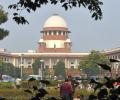
A Constitution bench comprising Chief Justice B R Gavai and Justices Surya Kant, Vikram Nath, P S Narasimha and A S Chandurkar, would fix the timelines on July 29 and commence hearing on the presidential reference in mid-August.

''Women are coming into public spaces in larger numbers than ever before. They are educated, capable, opinionated, and determined.' 'But the more women push for access to public space, the harder they are pushed back -- through attacks like this, through discrimination, through the glass ceiling, through the deliberate denial of recognition.'

The BJP has criticized West Bengal Chief Minister Mamata Banerjee following Supreme Court observations regarding obstructions during ED raids at I-PAC premises, alleging abuse of power and shielding of those accused of corruption.

The fiscal tilt towards capex benefits companies in investment-related sectors like capital goods, defence equipment, engineering & construction and metal & mining. The planned cut in revenue expenditure will weigh on companies in consumption sectors like FMCG, consumer durables and retail.

The Venezuelan President and his wife Cilia Flores were earlier captured from Caracas after US President Donald Trump unilaterally sanctioned a military operation on Venezuelan soil.

The cost of any flight from Delhi and Mumbai could rise by up to Rs 3,000 soon unless the airport regulator is able to reverse a court order.

'If you want to force the press into blacking out the Opposition's views or colour the news to your own liking, we will not do so.' 'We stand by freedom of expression. It is our Constitutional right. We stand by our Constitutional right.'

Mohun Bagan Super Giant defeated Kerala Blasters 2-0 in the opening match of the Indian Super League season.

The Supreme Court has expressed serious concern over the Enforcement Directorate's allegations of obstruction by the West Bengal government and Chief Minister Mamata Banerjee during raids related to a coal-pilferage scam. The court intends to examine the matter and has also taken note of the commotion at the Calcutta High Court during hearings related to the case.

The Supreme Court has directed the Election Commission to display the names of those on the 'logical discrepancies' list at various public offices in West Bengal, addressing concerns about irregularities in the voter rolls.

'Arundhati Roy is like a ballerina performing on a high wire, cool, supremely at ease but conscious of all the adoring eyes on her,' notes P Vijaya Kumar.

The Supreme Court has stayed a recent University Grants Commission (UGC) regulation following petitions arguing that the Commission's definition of caste-based discrimination was too narrow, excluding certain categories from institutional protection.
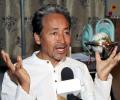
Climate activist Sonam Wangchuk, detained under the National Security Act, denied allegations in the Supreme Court that he incited sedition. His lawyer argued that the police selectively used video evidence to mislead authorities.
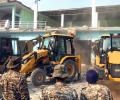
'The implementation of the judgment has largely been left to the discretion of the very executive authorities it sought to restrain.'

BJP-ruled states argued in the Supreme Court that governors and the President have autonomy in assenting to bills passed by state assemblies, asserting that courts cannot mandate assent.

'As the PLA higher command is almost dismantled and instability spreads, India needs to be prepared for any eventuality,' cautions China expert Srikanth Kondapalli.
The Tamil Nadu government has urged the Supreme Court to dismiss the Presidential reference concerning the Governor's powers to assent to bills, arguing it is an 'appeal in disguise' to overturn settled law.
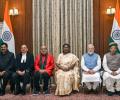
The Supreme Court's opinion on the presidential reference can impact on any number of cases if and when governors, if not the President, take a literary view of the Supreme Court's 'ppinion' on their 'discretionary powers' without reference to the rider on 'reasonable time', points out N Sathiya Moorthy.

The Alliance of Digital India Foundation (ADIF), in an application to the Competition Commission of India (CCI), has alleged that technology company Apple is using dilatory and delaying tactics in the regulator's investigation against the company and has sought interim relief for Indian startups and digital companies, according to people close to the development.

'What has changed is that the new regulations are backed by a clear enforcement framework. They have real consequences and, for the first time, make compliance unavoidable.'
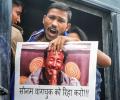
The Centre and the Union Territory of Ladakh administration have accused jailed climate activist Sonam Wangchuk of attempting to instigate Gen Z for protests, drawing parallels to unrest in Nepal, Bangladesh, and the Arab Spring.

The Supreme Court intervened to protect the Punjab Kesari newspaper from coercive actions by the Punjab government and its pollution control board, ensuring its continued publication.
The Supreme Court has stayed a Madhya Pradesh High Court order that would have reinstated a judicial officer who was terminated for allegedly creating a nuisance and urinating in front of a woman's berth on a train in 2018.
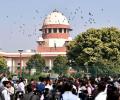
The Supreme Court of India has ruled that no timelines can be imposed on governors and the president to grant assent to bills passed by state assemblies, clarifying the extent of their powers under Article 200 of the Constitution.

A bench of Justices Vikram Nath and Sandeep Mehta termed the exorbitant rise of airfares by airlines as "exploitation" and asked the Centre and the Directorate General of Civil Aviation (DGCA) to file their replies to a PIL seeking binding regulatory guidelines to control the unpredictable fluctuations in airfare and ancillary charges imposed by private airlines in India.

The Supreme Court is scheduled to hear a plea by the producer of the Tamil film "Jana Nayagan," starring Vijay, challenging a Madras High Court order that stayed the granting of a censor certificate to the movie. The film's release has been delayed due to certification issues.

'Once the actual scope is understood, it becomes evident that the framework is about internal redress and course correction, and in no way criminalisation.'

China has made serious inroads into Latin America, which the US may now be hinting is simply not ok: Stay in your lane, Xi! In simple terms, China will no longer have access to Venezuelan oil, points out Rajeev Srinivasan.

As he is laid to rest, Indian cricket bids farewell to one of its greatest administrators -- a visionary who understood that breaking monopolies and building stadiums were about the same thing: Giving millions of cricket-loving Indians the infrastructure worthy of their passion.

You can watch some of the Oscar nominated films on OTT.

Congress leader Rahul Gandhi has criticized the central government's alleged attempt to block the release of the Tamil film 'Jana Nayagan', calling it an attack on Tamil culture. The controversy surrounds the film's certification and release, coinciding with actor Vijay's entry into politics.
Congress leader Rahul Gandhi has criticized the central government's alleged attempt to block the release of the Tamil film 'Jana Nayagan', calling it an attack on Tamil culture. The controversy surrounds the film's certification and release, coinciding with actor Vijay's entry into politics.

He was sleeping in a garage when the fire broke out, and CCTV footage suggests foul play.
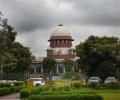
The Supreme Court of India has imposed a fine of Rs 10 crore each on 10 private dental colleges in Rajasthan for irregularities in admissions, citing blatant illegality and willful violation of rules. The court also directed the state government to deposit Rs 10 lakh for failing to adhere to legal procedures.

'When the accused has a past record demonstrating unprecedented and unmatched criminality and perversion, I believe the interests of justice would have been better served if such a person remained behind bars.'

Staring at a permanent paralysis: Indian footballers urge FIFA intervention on ISL

The Centre is considering amendments to the Recovery of Debt and Bankruptcy Act in the Budget to allow some Debt Recovery Tribunals to focus only on high-value cases.
